.GRACE AND FRANKIE – TEMPORADA
5 (USA, 2019) – Esta quinta temporada ainda não recuperou os
pontos altos das primeiras. Sol e Frankie (Sam Waterston e Lily Tomlin) ainda
continuam como os personagens mais adoráveis. O aparecimento do irmão de Coyote
pretendeu aumentar o arco dramático do filho mais desamparado, mas as soluções encontradas
não ajudaram muito. This fifth season
did not succeed in getting back the highlights of the first ones. Sol and
Frankie (Sam Waterston and Lily Tomlin) are still the most adorable characters.
The appearance of Coyote’s brother intended to expand the dramatic arch of the
poor son, but the posterior solutions did not help the script.
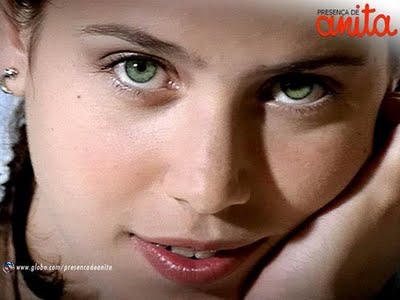
PRESENÇA DE ANITA (BRASIL,
2001) – A Anita criada por
Manoel Carlos, inspirada na obra de Mário Donato, tem muito, claro, da Lolita,
de Nabokov, mas a atuação de Mel Lisboa imprime algumas características
marcantes: era escolha certa para o personagem, pois sua inexperiência como
atriz ajudou na atitude mesclada de inocência e malícia, especialmente quando contracena
com atores mais tarimbados. De fato, Mel Lisboa parece ter entendido a chance de
uma carreira promissora, coisa que não aconteceu, principalmente pela força do personagem.
Ao que parece, Anita não permitiu que a atriz saísse de sua vida, repetindo o
que fez durante a obra. Anita has
Much of Nabokov’s Lolita, but Mel Lisboa’s performance points to the fact that
she was the best choice for the role due to her dramatic inexperience. Blending
innocence and malice, especially when she shares scenes with real actors, she achieves
the right balance of her character.
TRUE LIES (USA, 1994) – Clássico
dos filmes de ação dos anos 90, este filme de James Cameron é muito bom,
divertido, talvez um dos melhores de Arnold Schwarzenegger. Ali, há tudo que um
filme de ação precisa: um herói plausível, explosões, perseguições, troca de
tiros, um vilão estereotipado e alta dosagem de entretenimento. Classic of
the 90s action movies, this James Cameron’s movie is everything an action flick
should be like. Maybe, one of the best of Arnold Schwarzenegger’s career. The
movie has everything a good action movie need: A believable action hero,
explosions, chases, gun fights, a stereotype villain and a high entertainment
value.
FRANKIE E JOHNNY (USA, 1991)– O que mais chama a atenção nesse filme de
Gary Marshall é a simplicidade da história de amor entre Frankie e Johnny. Claro que nada funcionaria sem dois atores
superlativos como Al Pacino e Michelle Pfeiffer. Nova Iorque é o lugar perfeito
para um roteiro sobre a solidão, as perdas afetivas, a busca pelo amor e o medo
inerente a tudo isso. A abordagem sincera desses temas enriquecem uma história
na qual você acredita de pronto, pois ela já estava dentro de você. Imperdível. What is more alluring in this movie is the
simplicity of Frankie and Johnny”s love story. Evidently, nothing would work
without two superlative actors like al Pacino and Michelle Pfeiffer. Set in New
York, the movie deals with loneliness, different ways of coping or letting go,
it deals with love, the yearning for it and also the fear of it, this magical
feeling you almost don't dare hope for. The simple but genuine approach to
these important themes makes the story stand out and makes you want to believe,
because deep inside you already do. Unmissable.
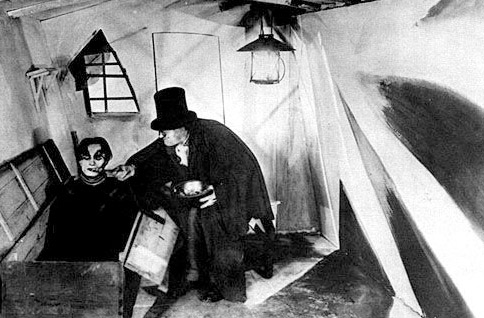
.O GABINETE DO DR.
CALIGARI (DAS KABINETT DES DOKTOR CALIGARI, Alemanha, 1919) – Pedra
angular do cinema fantástico surgido na república de Weimar, na década de 20,
este filme de Robert Weine tem profundas conexões com o Expressionismo alemão. Os
efeitos estilizados, personagens mágicos e teatrais exageram uma realidade já
caricaturada, refletindo as ruínas nacionais do pós-guerra. Desta forma, vê-se
na tela um mundo fora dos eixos, com cenas retorcidas a frisar essa distorção. Fritz
Lang colaborou com o roteiro, tornando o filme uma obra eclética, misturando
uma estética artística com as linhas gerais do terror. Touchstone of the fantastic cinema of the Weimar
Republic in the 20s, Robert Weine’s movie has strong connections with the
German Expressionism. The stylized effects, magical and thespian characters
exaggerate an already caricatured society that mirrors the post-war national ruins.
Thus, an upside-down world is seen, and twisted scenes reinforce this distortion.
Fritz Lang helped with the script, making the movie an eclectic work, mixing
artistic esthetics with general lines of the horror genre.
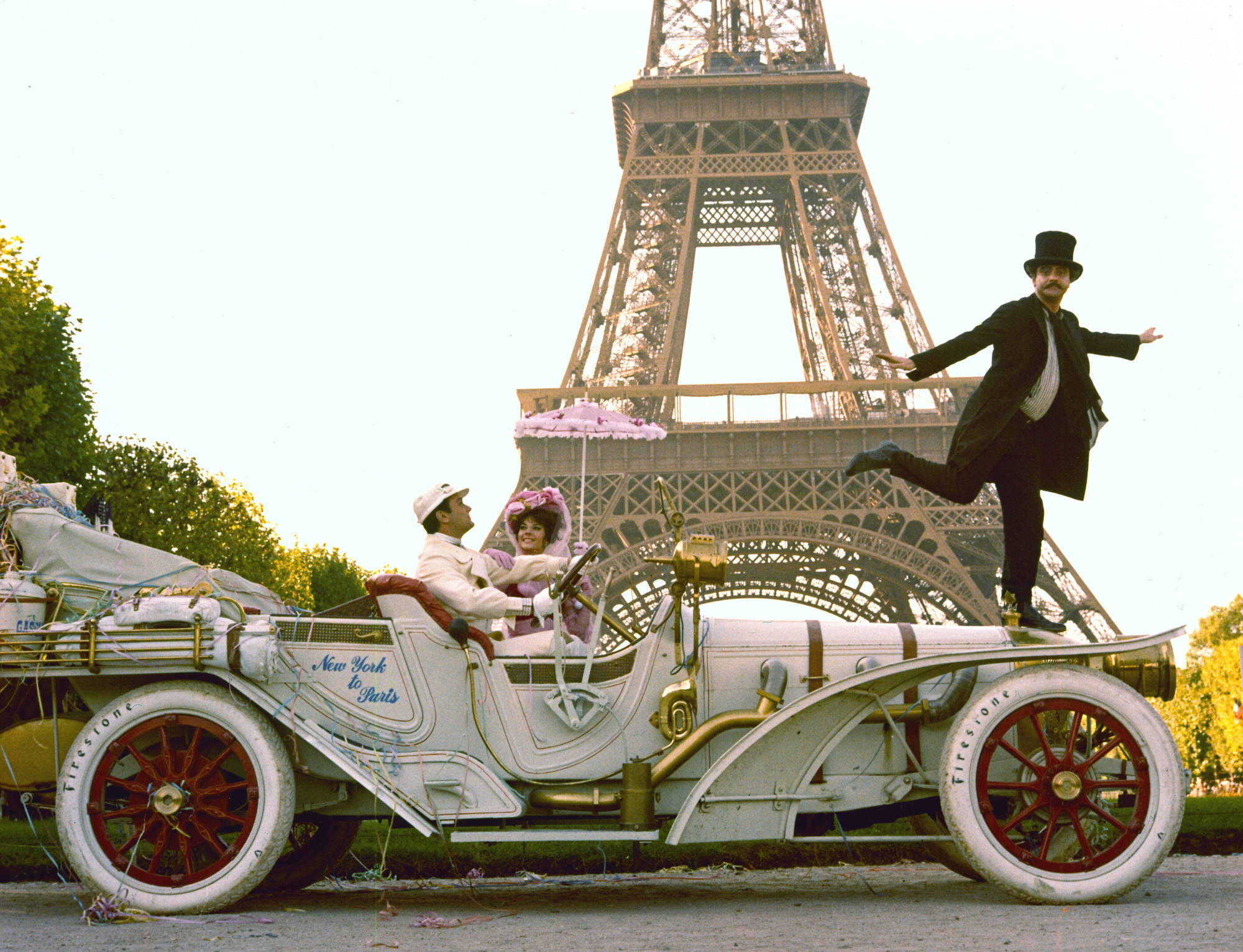
A CORRIDA DO SÉCULO (THE
GREAT RACE, USA, 1965) – Um dos meus filmes de
estimação, A CORRIDA DO SÉCULO ainda é um espetáculo para os olhos e uma emoção
sem fim para quem ainda lembra do deslumbre desta obra na tela grande. Jack Lemmon,
sempre tão sério e comedido em seus papéis, não tem limites aqui: leva às fímbrias
do ser sua histrionice no papel do Professor Fate, inimigo do grande Leslie
(Tony Curtis), numa corrida maluca entre Nova Iorque e Paris. Sim, o filme foi
a inspiração para o desenho CORRIDA MALUCA: Dick Vigarista e seu parceiro
Mutley foram baseados no Professor Fate e seu ajudante Max (Peter Falk),
Penelope Charmosa é a Maggie Dubois de Natalie Wood e Peter Perfeito é a cara
de Tony Curtis. Há passagens antológicas: a mais longa cena de pastelão do
cinema (4 minutos), as geringonças de Fate, Curtis pendurado de cabeça para baixo
num balão e as pernas de Natalie Wood. Blake Edwards sempre foi conhecido por
sua inclinação à comédia pastelão e ao humor físico do vaudeville – esta característica
perpassa todo o filme. É alguma coisa que deveria ser vista sempre, um
testemunho de como o cinema americano da década de 60 encantava os espectadores
para a vida inteira. One of
my pet movies, THE GREAT RACE is still a spectacle for the eyes and an endless
thrill for those who watched it on the big screen. Jack Lemmon, always reserved
about his roles, has no limits here: he reaches the boundaries of his
histrionics on the role of Professor Fate, enemy of the great Leslie (Tony
Curtis), in a crazy race between New York and Paris. Yes, the movie was the
inspiration for the cartoon show WACKY RACES (1968): Dick Dastardly and his
sidekick Mutley were based on Fate and Max (Peter Falk), Penelope Pitstop is Natalie
Wood’s Maggie DuBois, and Peter Perfect is Tony Curtis. There are anthological
passages: the longest pie fight sequence in movie history (4 minutes), Fate’s
contraptions, Curtis dangling upside down from a balloon, and of course Natalie
Wood’s legs. Blake Edwards was known for his penchant for slapstick physical
humor and Vaudevillian visual gags. The movie is to be always seen as a testimony
of how the American cinema of the 60s had a permanent effect on people.
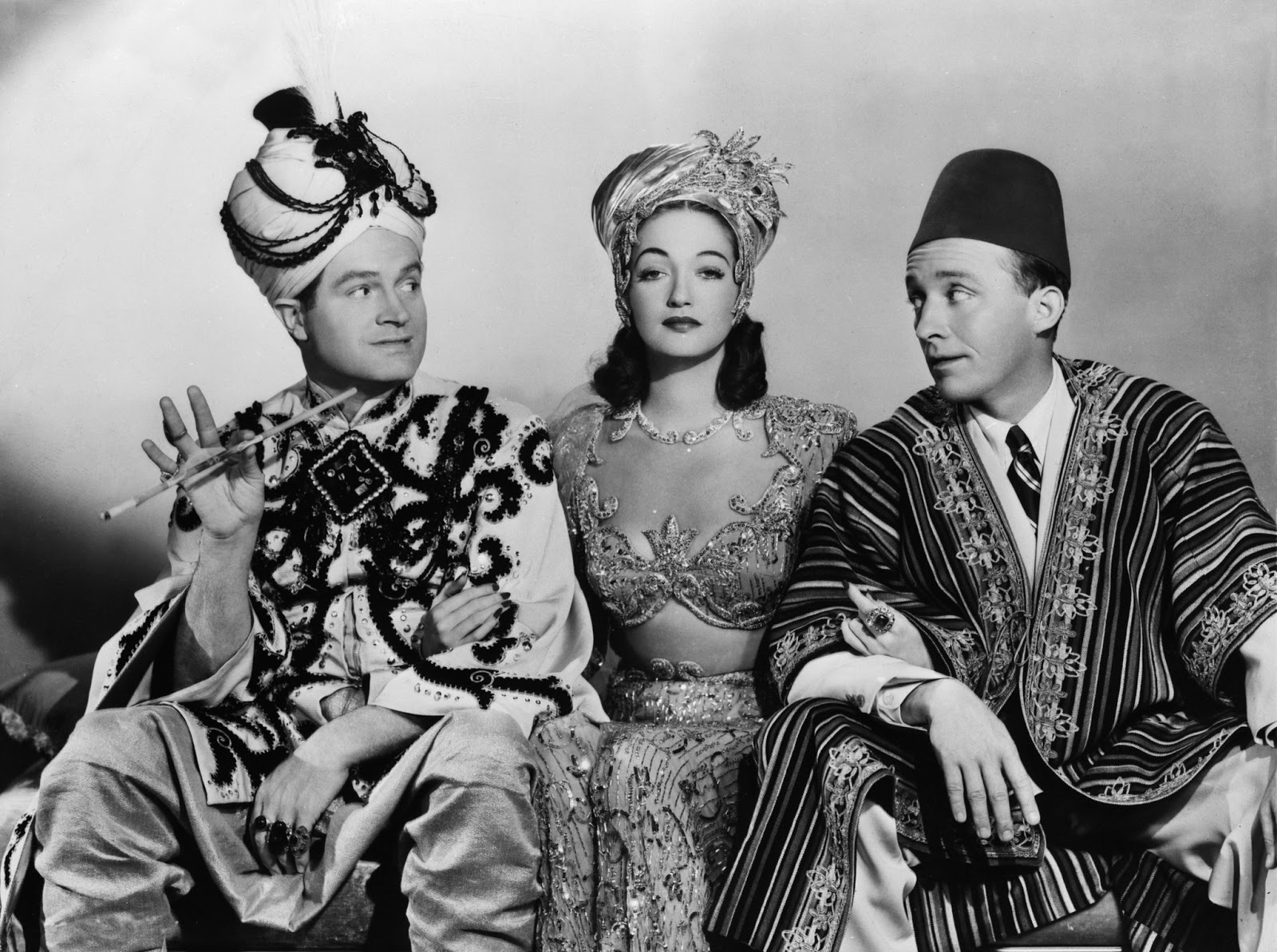
A SEDUÇÃO DE MARROCOS (ROAD TO MAROCCO, USA, 1942) – Não se deve esperar uma grande
obra de arte dramática com essa série estrelada por Bing Crosby e Bob Hope. Apenas
diversão, o que é ótimo. Hope era excelente na stand-up comedy apenas e ele
certamente sabia disso. Desta forma, adequava sua
carreira no cinema ao seu talento. Crosby, por sua vez, era um cantor que
queria atuar, e o fato de ter ganhado um Oscar em 1944 é o resultado desta
dedicação. Don’t expect to go into a
viewing of any Hope and Crosby picture and see a strong story or plot, nor
should you expect the acting to be outstanding. They deliver fun, which is great.
Bob Hope's true strength was standup comedy, not acting, and I think he knew
that. That's why we only saw him in roles where he could be pretty much rely on
his stand-up skills. Bing Crosby, on the other hand, had a flair for acting
even though he was primarily a singer. In fact, this won him an Oscar two years
later, which shows how serious he was about his acting.
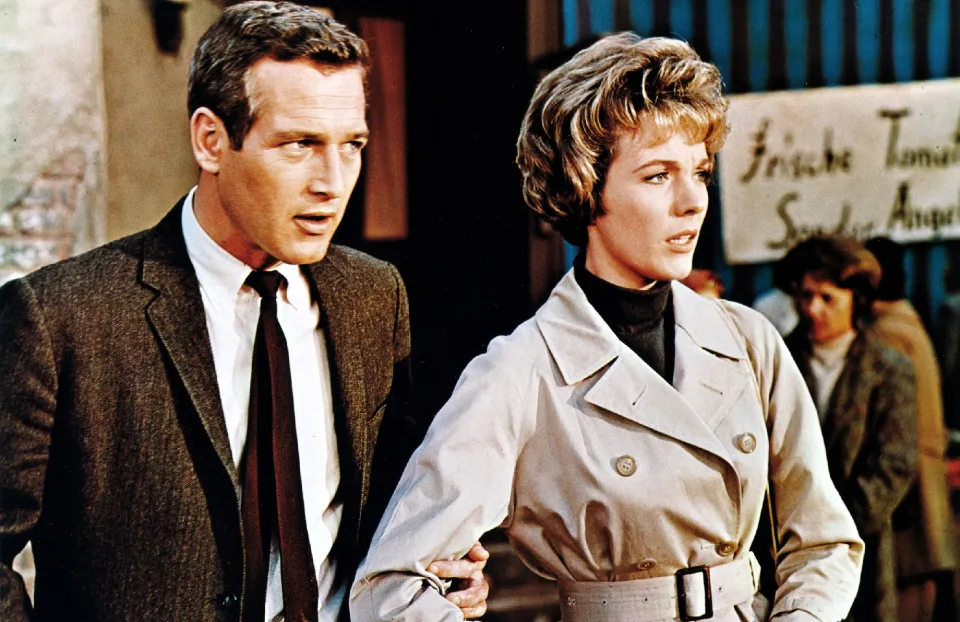
CORTINA RASGADA (TORN CURTAIN, USA,
1966) – Dois grandes astros, Paul Newman e Julie Andrews, com ninguém menos que Hitchcock no comando. Não tinha como dar errado. Mas deu. Newman e Julia Andrews, dois dos atores mais bonitos de Hollywood, não têm qualquer química em cena. Neste filme, há uma dispersão nunca vista nos filmes de Hitch. Tudo parece for a de lugar, exceto por alguns momentos. Bernard Hermann também fez falta. Two huge box office stars, Paul Newman and Julie Andrews with Hitchcock no less, at the helm. It could not go wrong. But it did. Newman and Julie Andrews, two of the most beautiful Hollywood actors, have no chemistry. In this movie, there is a detachment never seen before in a Hitch flick. Everything seems out of place, except for some moments. We missed Bernard Hermann.
O HOMEM INVISÍVEL (THE INVISIBLE
MAN, USA, 2020) – Apesar do
esforço para dar uma nova roupagem a um velho tema, o que fica invisível aqui é
a qualidade do filme. Elenco fraco – a protagonista, Elisabeth Moss, está
perdida num roteiro cheio de falhas, com tudo muito previsível e mal realizado.
Claude Rains e Kevin Bacon permanecem
as referências definitivas. Despite the effort to refresh an old theme, what is
invisible here is the quality of the movie. The cast is weak – the leading
actress, Elisabeth Moss, is lost in a script full of holes. Everything is very predictable
and poorly assembled. Claude Rains and Kevin Bacon are still the definitive references.
OS PÁSSAROS (THE BIRDS,
USA, 1963) -Assistir a OS PÁSSAROS é sempre uma
experiência reveladora da genialidade de Hitchcock. Invariavelmente, há algum
aspecto novo a ser descoberto: agora, reparei que quando Melaine Daniels
(Tippi Hedren) fica em close, Hitch desfoca a imagem, como se a colocasse em
outro plano de percepção. É um filme que confirma a utilização dos efeitos especiais
para servir à história e aos personagens e não o contrário. Há também Suzanne
Pleshette, uma das atrizes mais bonitas da época – era a primeira escolha para
a Mulher-Gato (Batman, 1966), papel que acabou com Julie Newmar. No filme, ela faz o contraponto com a
postura gélida de Tippi Hedren. Suzanne foi considerada para o papel de
Jennifer Hart em CASAL 20. Num dos episódios de O FUGITIVO
(1963), apaixonou-se por David Hansen, um dos homens mais sortudos de todos os
tempos. THE
BIRDS is always worth watching again and again for the movie is also a revealing
experience of Hitchcock’s genius. There is invariably a new aspect to be found:
now, I have noticed that Melaine Daniels (Tippi Hedren) has always an unfocused
close-up. This movie is also a
reminder to the filmmakers that the effects should be at the service of the
characters and not the other way round. In addition, there is also Suzanne Pleshette,
one of the most beautiful actresses of the time – she was the producers'
original choice for the role of Catwoman on the (BATMAN,1966) TV show. When negotiations
broke down, the part went to Julie Newmar. In the movie, she is the counterpart for the icy
blonde Tippi Hedren. She was considered for the role of Jennifer Hart in HART
TO HART (1979). During the filming of her guest spot on THE FUGITIVE (1963),
Suzanne fell fiercely in love with the show's star David Janssen, one of the luckiest men ever.
Liv Ullmann e David Carradine se horrorizam com o início do Nazismoo
O OVO DA SERPENTE (THE
SERPENT’S EGG, USA, Alemanha, 1977) – Este filme
de Ingmar Bergman se passa na Alemanha, em 1923, quando o nazismo começava a se
estabelecer como força política violenta e persecutória. David Carradine é Abel
Rosemberg, um trapezista judeu americano. Junto com Manuela (Liv Ullmann),
viúva de seu irmão suicida, se depara com os experimentos eugênicos do Dr.
Vergerus, que regam a semente do nazismo. Tecnicamente, com seu clima noir, o
filme é uma homenagem ao Expressionismo alemão, apesar de não ser em P&B. Carradine não me parece o ator certo para o personagem. Além disso, a explicação didática do ovo da serpente, na sequência final, ficou abaixo do que se espera do diretor de O SÉTIMO SELO. This
movie directed by Ingmar Bergman takes place in Germany, in 1923, when the Nazi
party appeared as a violent political persecutory force. David Carradine is Abel Rosemberg, an
American Jewish acrobat. He and Manuela (Liv Ullmann), his suicided brother’s
widow, face the eugenic experiments that gave origins to the seeds of Nazism. Technically,
it is a noir movie and is
considered a homage and tribute to German Expressionism, though ironically, the
film is not shot in black-and-white, like many of Bergman’s earlier films, as
well as the German Expressionist films. Carradine does not seem the right actor for the role. Besides, the didactic explanation for the serpent's egg, during the final sequence, is not on a par with what is expected from the director of THE SEVENTH SEAL. On YouTube.
SABOTADOR (SABOTEUR, USA,
1942)– Apesar
do erro de escalação dos protagonistas – Robert Cummings e Priscilla Lane não
são atores hitchcokianos, o filme funciona. Falta-lhes aquela tragicidade e frieza calculada de
James Stewart e Grace Kelly. A história de um homem injustamente acusado de
sabotagem numa fábrica de aviões se ancora numa clara propaganda de guerra,
embora o roteiro não faça qualquer referência aos alemães. O filme tem muita
ironia, e esse respiro cômico primeiro atenua para, depois, acentuar os
aspectos dramáticos. Despite the mistake in cast of the leading roles – Robert Cummings
and Priscilla Lane are not Hitchcokian actors. They are deprived of tragedy
colors and calculated coldness found in James Stweart and Grace Kelly. The story
of a man infairly accused of sabotage in a plane plant is an undisguised war
propaganda, tough the scrit does not make any reference to the Germans. The movie
is more reliant on the use of irony. Its comic relief first attenuates then accentuates
dramatic aspects.
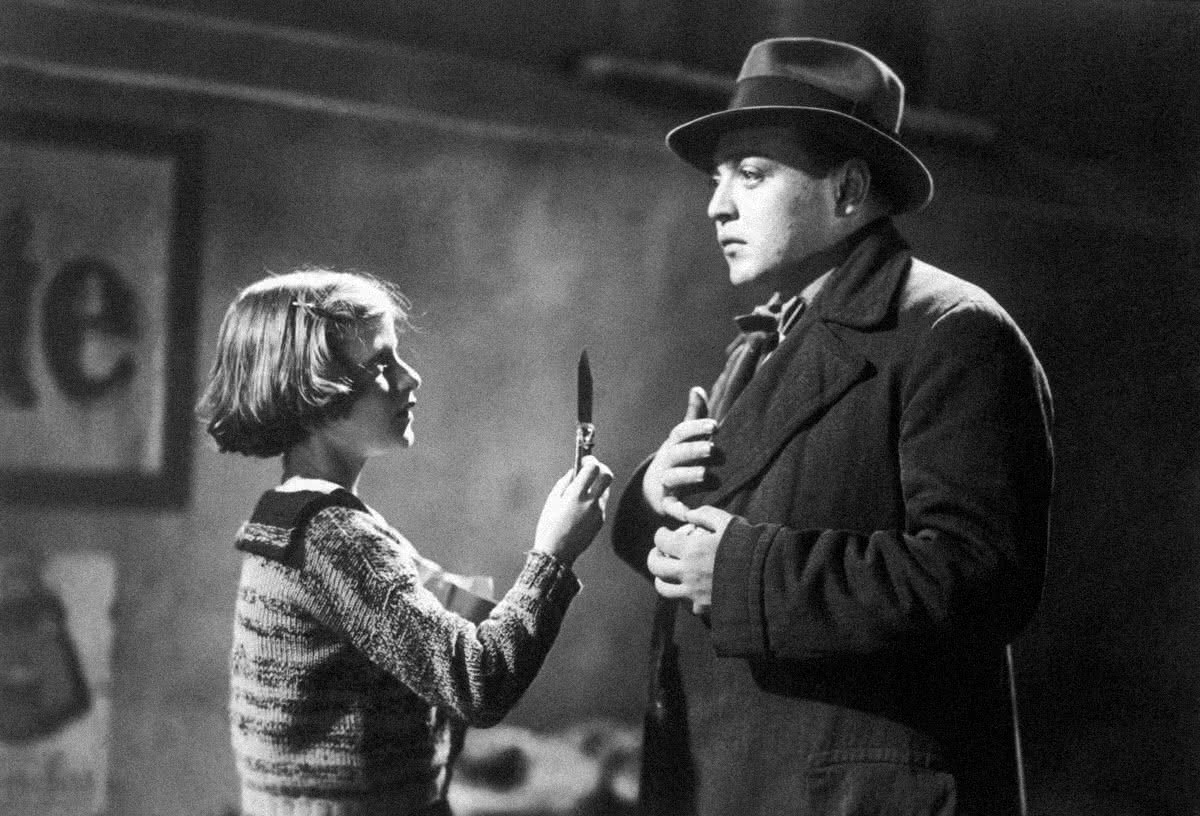
M, O VAMPIRO DE DUSSELDORF
(M, Alemanha, 1931)– Esse primeiro filme falado de Fritz Lang é realmente uma
obra-prima. Numa Alemanha em plena depressão no pós WWI, M é a história de uma
cidade aterrorizada por um psicopata sequestrador e matador de crianças, Hans
Beckett (Peter Lorre, assustador mesmo). O nazismo se estabelecia como força
persecutória violenta, e isso se refletia na reação dos habitantes da cidade
diante da sensação de insegurança cumulativa. Desta forma, pode-se considerar
que a cidade, e não o assassino, seja o personagem principal de Lang. Isso fica
evidente na cena em que, em um porão, um grupo de pessoas forma um júri popular
para o julgamento sumário de Beckett. Polícia e o submundo do crime se juntam
para encontrar o criminoso, mostrando uma semelhança, na época, entre esses
dois grupos. As sementes do nazismo estão todas lá: autoritarismo, perseguição,
violência, mentiras. Além disso, muito material sobre psicologia das massas
(Escola de Frankfurt, rápido!), efeito Kuleshov e planos-sequências. Tudo muito atual. This first Fritz
Lang’s talking movie is a definitive masterpiece. In a post WWI depressed
Germany, M is the story of a city terrified by a child-murderer, Hans Beckett
(Peter Lorre, too scary). At the time, Nazism was being established as a violent
persecutory force, and this is reflected on the inhabitants’ behaviour in this
insecure situation. Thus, the city is the main character, not the assassin.
This is clear when a group of people in a basement is gathered to judge
Beckett. Police and the criminals join forces to arrest him, and this mirrors
the similarity between the two groups. The seeds of Nazism are all there:
authoritarianism, persecution, violence, lies. Besides, plenty of material about
mass psychology (School of Frankfurt, quick!), Kuleshov effect and sequence-plans.
More uptodated impossible.
HOMEM-ARANHA (SPIDER-MAN, USA,
2002) – Para mim, este é o melhor filme sobre o
herói aracnídeo criado por Stan Lee. Por vários motivos: Tobey Maguire é o
Peter Parker definitivo – nenhum dos outros atores que o sucederam conseguiram
captar a alma do personagem. Os CGIs ainda são muito bons, e o vilão, Duende
Verde (Willen Dafoe), é omelhor (ou o
pior, dependendo do ponto de vista) até agora. Só há um problema: Kirsten Dunst
destoa de todo o filme, pois sua atuação é ruim, ela não é tão bonita nem traz empatia
para o personagem. J.K. Simmons está perfeito como J.J. Jamenson, o editor do
jornal onde Peter trabalha como fotógrafo. No entanto, o filme é mesmo do
diretor Sam Raimi, fã do personagem e destinado a levá-lo à tela grande com
tamanha competência. A forma não convencional de mostrar a violência dentro de
uma engenharia cinematográfica caprichada era exatamente do que precisávamos para trazer o
Homem-Aranha para o nosso universo. To me this is the best Spider-Man movie ever. Tobey Maguire
is the definitive Peter Parker, the CGIs are still working and Willen Dafoe is
perfect as the Green Goblin; there is only one problem: Kirstin Dunst is completely
out of place, has a poor performance and no empathy at all. J. K. Simmons is
perfect as J. J. Jameson. But
Spider-Man belongs to Sam Raimi. A Spider-Man superfan since childhood, Raimi
was destined to bring the web-slinger to life. The offbeat sense of violent fun
and jubilant cinematic showmanship that was so entertaining is precisely what
was needed to bring Spider-Man to our lives.
PACTO SINISTRO (STRANGERS
ON A TRAIN, USA, 1951) – Este filme de Hithcock
erra na escalação de Farley Granger, como um dos protagonistas, Haines, mas
acerta com Robert Walker, Bruno, o antagonista psicopata que propõe uma troca
de assassinatos: ele mataria a esposa de Haines, que, em troca, acabaria com o
pai de Bruno. Outro acerto de Hitch é a escalação de sua filha, Patricia, com
um papel bem mais importante do que em PSICOSE. Eu não lembrava que Marion Lorne,
a tia Clara de A FEITICEIRA, estava no filme. Fica evidente o desconforto de
Ruth Roman em suas cenas – ela sofreu com a implicância de Hitch, pois ela foi
uma imposição da Warner e ele teve que aceitar, segundo disse a Truffaut no
livro da sua entrevista com o Mestre. Alfred Hitchcock made a mistake casting Farley Granger as one
of the leading roles, Haines, but chose wisely with Robert Walker as Bruno, the
psicopath antagonist who suggests they swap murders: he would kill Haines’s
wife and, in exchange, Haines would murder Brunos’s father. Another excellent
choice is Patricia Hitchcock on a more important role than she had in PSICHO. I
didn’ t remember that Marion Lorne, aunt Clara of BEWITCHED, was in the movie. It
is clear Ruth Roman’s disconfort in her scenes – she was intimidated by Hitch
during the shootings, because she was imposed by Warner and he had to accept,
according to Truffaut’ s books on his interview with the master. On YouTube.
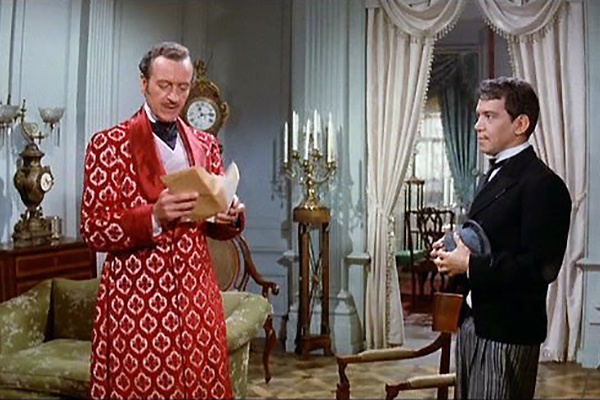
A VOLTA AO MUNDO EM 80 DIAS
(AROUND THE WORLD IN 80 DAYS, USA, 1957) – Clássico dos anos 50, o
filme produzido por Mike Todd, também introduziu o cameo, em grande estilo: mais
de 40 famosos aparecem ao longo das 2h47min de projeção – Frank Sinatra,
Marlene Dietrich, Charles Boyer, John Gielgud, Cedric Hardwicke, Buster Keaton,
Peter Lorre, Cesar Romero, entre outros. David Niven é o protótipo do inglês fleumático
e, revendo o filme agora, percebo que ele quase não atua, como se estivesse o
tempo todo observando, a distância, as cenas, como se não estivesse presente. Da
mesma forma, Cantinflas me causou uma impressão muito menos marcante do que me
lembro: afora algumas cenas acrobáticas, ele também tem sua presença diluídas
nas longas (e belas) sequências de várias locações pelo mundo. Segundo Benvindo
Sequeira, a primeira opção para o papel de Passe-partout era Oscarito, que não
aceitou. Shirley MacLaine, no seu terceiro filme, também tem pouco espaço. De qualquer
forma, é uma superprodução que funciona muito bem na tela grande, mas perde o
impacto na TV. Classic of the 50s,
the movie produced by Mike Todd also introduced the concept of the cameo appearances
in great style: more than 40 celebrities can be seen along the 2h47min
projection - Frank Sinatra, Marlene Dietrich, Charles Boyer, John Gielgud, Cedric
Hardwicke, Buster Keaton, Peter Lorre, Cesar Romero, among others. David Niven
is the prototype of the Englishman, and, watching the movie again, I notice
that he barely acts, as he was observing the scenes from distance, in complete absence.
By the same token, Cantinflas caused me the same impression: apart from some
acrobatic scenes, he has some modest scenes in the long and beautiful sequences
in various parts of the world. According to Benvindo Sequeira, the first option
to play Passe-partout was Oscarito, who declined the invitation. Shirley MacLaine,
in her third movie, also had limited space. Anyway, the movie is a super
production that works finely on the big screen, but loses impact on TV. DVD.
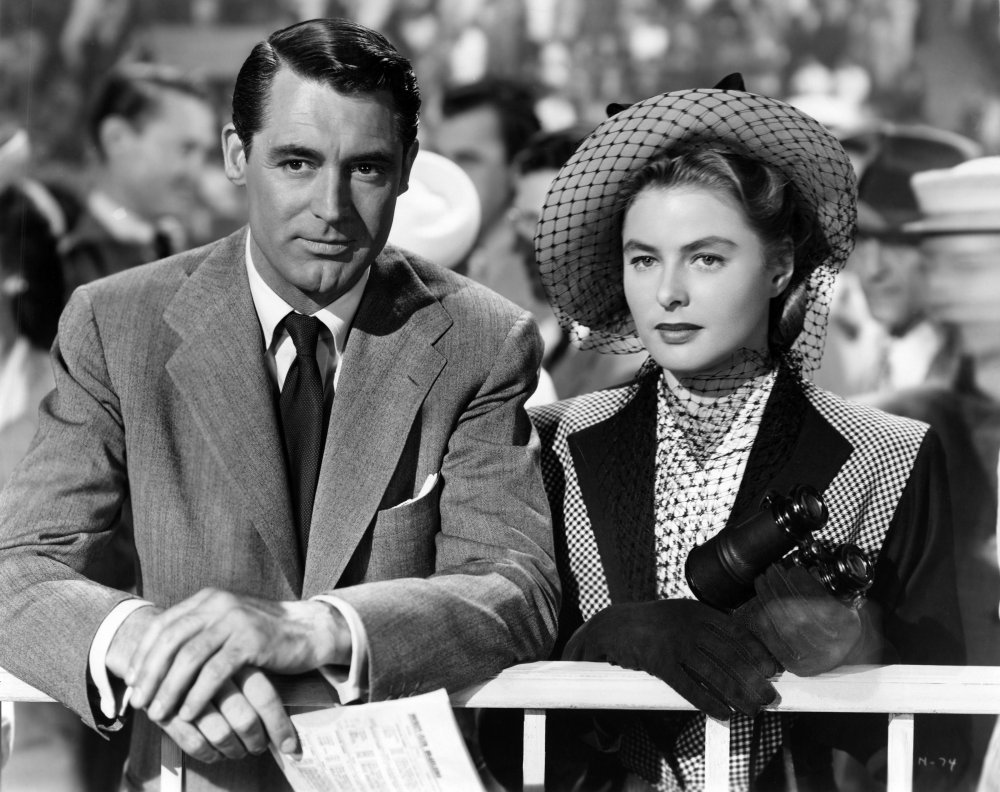
1.INTERLÚDIO (NOTORIOUS, USA,
1947) – Este filme de Hitchcock
se passa no Rio de Janeiro, onde, logo depois da WW2, grupos de nazistas se
escondem. Cary Grant é um agente do FBI, e Ingrid Bergman é uma espiã cuja
missão é seduzir Claude Rains, um dos líderes destas células. O MacGuffin deste
filme é o urânio escondido numa garrafa de vinho. Esse fato levou Hitchcock a
ser investigado pelo FBI. MISSÃO IMPOSSÍVEL II, de John Woo tem um roteiro
igual. Não há grandes suspenses no filme, mas o roteiro e a direção de Hitch
fazem de INTERLÚDIO um filme imperdível. Grant tem uma atuação contida, como
convém ao personagem, mas é Ingrid Bergman que domina o filme – tão incrivelmente
bela que encantou Hitch e todos nós. Cappa
que o diga. This Hitchcock movie takes place in Rio de Janeiro where, after WW2,
Nazi groups operate secretly. Cary Grant is a FBI agent, and Ingrid Bergman is
a spy whose mission is to seduce Claude Rains, one of the Nazi leaders. The MacGuffin
of this movie is the Uranium hidden in a wine bottle. This fact caused Hitchcock
to be investigate by the FBI. The movie MISSION IMPOSSIBLE II, directed by John
Woo and written by Bruce Geller and Ronald D. Moore seems a virtual remake of
Notorious, in plot, characters, story line and some sequences are almost scene
by scene. There are not many nail-biting moments in `Notorious', but the script
is excellent. Coupled with the superior acting and direction, `Notorious' is
certainly a Hitchcock film that should not be missed. Grant has a sober performance,
but it is Ingrid Bergman who fills the scenes – she was so incredibly beautiful
that charmed Hitch and whoever watches the movie. Capa knew best.
O QUE FICOU PARA TRÁS (HIS HOUSE, UK, 2020) – Um casal de refugiados do Sudão é colocado em uma casa
decrépita nos subúrbios de Londres, enquanto aguarda a aprovação do seu pedido de
asilo. Ali,
eles vão ser visitados por manifestações muito palpáveis das tragédias
acontecidas em suas vidas. Horror de cunho social, o filme é um ótimo exemplo
de como se pode coadunar os conflitos de um mundo capaz dos maiores horrores reais
com o gênero do terror. A magnífica atriz Wunmi Mosaku é a maior força
magnética do filme. A refugee couple
makes a harrowing escape from war-torn South Sudan. When they are finally
granted probational asylum in Britain three months later, the government
assigns them a shabby house with peeling walls and dismal furnishings on the
outskirts of London, where they are visited by ghost of their recent tragedies.
Horror with social colors, the movie is a great example of how to mix real life
terrors with the horror genre. The magnificent actress Wunmi Mosaku is the
greatest magnetic force of the movie. Netflix.
.CORAÇÃO SATÂNICO (ANGEL HEART, USA, 1987) – Louis
Cyphre e Harry Angel – os nomes dos personagens principais, vividos, respectivamente
por Robert De Niro e Mickey Rourke. O
filme de Alan Parker é uma dessas obras-primas obrigatórias na estante dos
grandes filmes. Com o twist final, tudo roteiro fica claro. Se há
algo que faz desse filme um clássico é a cinematografia e a atmosfera onírica. A direção de Alan Parker é, ao mesmo tempo,
sutil e arguta, capturando o clima noir à perfeição. As revelações são impactantes, fazendo do filme equilibrar-se
entre a violência gráfica e a sutileza. Lisa Bonet é uma epifania difícil de
esquecer. Once the ending has been revealed, all the hidden meanings emerge
from the woodwork and a truly shattering psychological experience reveals
itself. If anything makes this movie great (and qualifies it as a classic) it's
the cinematography and dreamlike atmosphere. Alan Parker's direction is both
subtle and sharp, and he really does a fine job capturing the noir-type mood. There
are so many convolutions and revelations that it's mind-boggling. Though often
graphic, Angel Heart can be subtle as well. Lisa Bonet is an epiphany that is
hard to forget.






![Saboteur | film by Hitchcock [1942] | Britannica](https://cdn.britannica.com/96/176696-050-6B18C00B/Robert-Cummings-Saboteur-Priscilla-Lane-Alfred-Hitchcock.jpg)